
Google's AI Glasses: A Hands-On Look at the Near Future of Wearable Tech
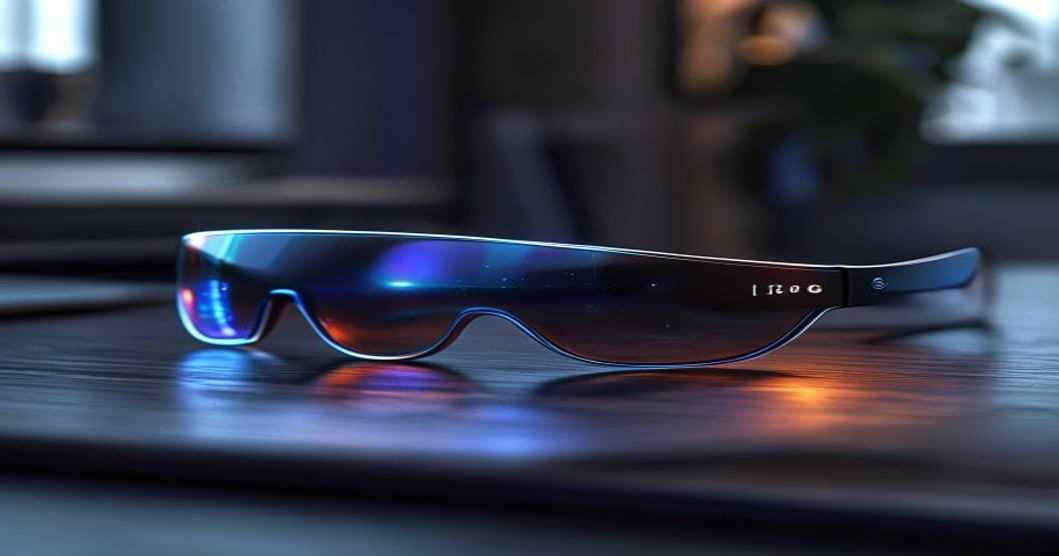
The elusive dream of truly ambient computing just took a massive step closer to reality. In a recent exclusive, TechCrunch reported on their hands-on experience with Google's latest iteration of AI-powered smart glasses. After the infamous era of Google Glass and a quiet period of enterprise-only pivots, Google is back in the consumer hardware game with a device that leverages their bleeding-edge multimodal AI models.
As developers who build tools for modern workflows here at Ichiban Tools, we are paying close attention. It's not just about the consumer appeal; it's about the fundamental shift in how applications will be built, deployed, and interacted with when the screen is no longer a rectangle in your pocket. Here is our breakdown of the announcement and the technical reality of building for the next generation of wearables.
#What Happened: The Hardware Meets Gemini
According to the hands-on report, Google has managed to pack a staggering amount of capability into a form factor that actually resembles standard, albeit slightly thick-framed, eyeglasses. This isn't a bulky mixed-reality headset like the Vision Pro or the Quest 3; it is an everyday wearable designed for persistent, all-day use.
The core of the experience is driven by an evolution of Project Astra, Google’s universal AI agent. Instead of a touch interface, the primary inputs are voice and vision. The glasses continuously (or via trigger) process what you are looking at, allowing for seamless, natural language queries about the surrounding environment. TechCrunch noted impressive performance in real-time translation, object recognition, and contextual problem-solving, like identifying complex code structures on a whiteboard or navigating foreign street signs.
#Why It Matters: The Era of Ambient AI
We have spent the last decade optimizing user interfaces for mobile screens. The shift to smart glasses represents a paradigm shift from intentional computing (pulling out a phone, opening an app, typing a query) to ambient computing (the system understands your context automatically and provides information contextually).
For developers and product teams, this means rethinking the concept of an "app." In an ecosystem dominated by AI glasses, applications might not have visual interfaces at all. Instead, they will act as specialized skill sets or knowledge bases that the central orchestrating AI (like Gemini) can call upon when the user's context demands it.
If you build a translation tool, an OCR engine, or a real-time summarizer (much like the utilities we offer), the delivery mechanism is no longer a web page; it is a seamless audio whisper or a subtle heads-up display overlay prompted by the user's gaze.
#Technical Implications: The Engineering Hurdles
While the hardware is "almost there," the engineering challenges required to reach a stable 1.0 release are immense. Here are the core technical domains being pushed to their limits:
#1. Edge-to-Cloud Latency Budgets
A conversational AI feels broken if the response latency exceeds 500 milliseconds. When dealing with live video feeds and audio inputs, achieving this latency budget is incredibly difficult.
- On-device processing: To reduce latency, we expect the glasses feature a dedicated NPU (Neural Processing Unit) capable of running smaller, quantized models locally (akin to Gemini Nano). These local models handle wake-word detection, basic intent parsing, and immediate visual tracking.
- Cloud offloading: Complex reasoning and generation must be offloaded to massive cloud infrastructure. The network stack must handle dynamic bandwidth allocation, streaming compressed video frames to the cloud only when necessary.
#2. Continuous Multimodal Sensor Fusion
The system is not just taking a photo and running a query. It is performing continuous sensor fusion:
| Sensor Type | Purpose in AI Glasses |
|---|---|
| RGB Camera(s) | Spatial mapping, object recognition, text parsing (OCR). |
| Microphone Array | Beamforming for voice isolation, environmental audio cues. |
| IMU (Accelerometers/Gyros) | Head tracking, gaze estimation, stabilizing the video feed for the AI model. |
Aligning the timestamps of these massive data streams so the AI understands that you pointed at an object exactly when you said "What is this?" requires incredibly precise real-time operating system (RTOS) design.
#3. Thermal and Power Constraints
The most significant barrier to smart glasses has always been physics. Processing video at 30+ frames per second, running local neural networks, and maintaining an active Wi-Fi/5G connection generates significant heat. In a device that sits on your face, the thermal budget is virtually zero. The fact that Google’s prototype doesn't overheat during active multimodal sessions suggests massive leaps in silicon efficiency and software-level power gating (shutting off sensors and chips at the microsecond level when not actively needed).
#What's Next for Developers?
As we move closer to a consumer release, the developer ecosystem needs to prepare for new SDKs. We anticipate Google will release APIs that allow third-party services to integrate into the ambient stream.
Imagine an integration where a developer looking at a server rack sees real-time Grafana metrics overlaid on the physical hardware, or a scenario where our own Ichiban OCR tool operates purely on the edge, pulling text from physical documents directly into your cloud clipboard just by looking at them.
We expect to see:
- Spatial Intent APIs: Frameworks for defining application triggers based on user gaze and location.
- Headless UI Kits: Tools for designing audio-first or minimal-HUD responses.
- Privacy-first data sandboxes: Strict permission models to ensure apps only get the visual data they explicitly need, when they need it.
#Conclusion
TechCrunch's hands-on report confirms that the science fiction vision of AI-powered smart glasses is rapidly transitioning into an engineering reality. Google has seemingly cracked the form factor, and the underlying multimodal AI models are finally powerful enough to make the hardware useful.
For the developer community, the clock is ticking. The interfaces of tomorrow will not be constrained by bezels; they will be overlaid on the physical world. It is time to start thinking beyond the screen and building for the ambient future.