
Navigating the Generative World: Google Genie Integrates Street View
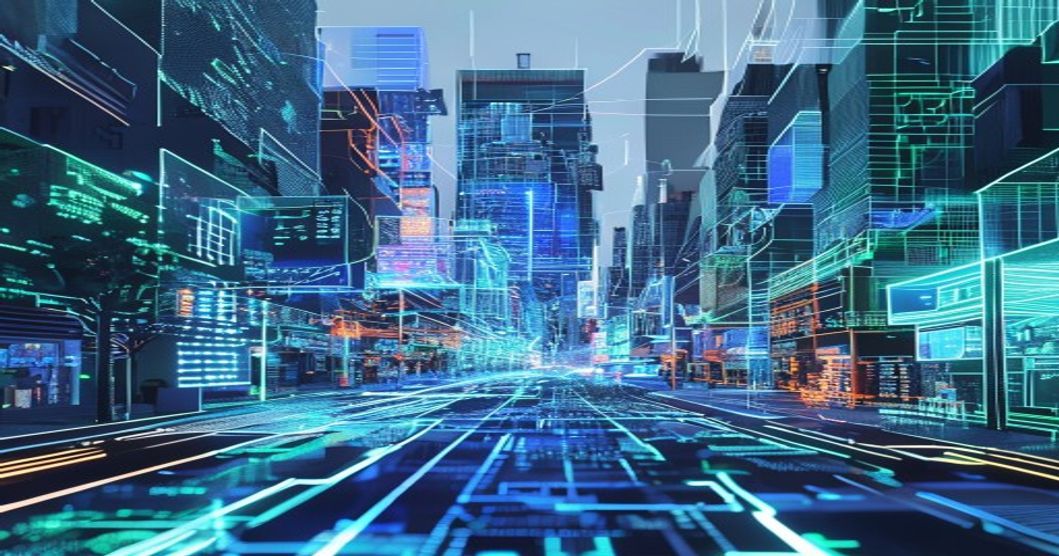
When Google first introduced Genie in 2024, the AI community was captivated by its ability to generate interactive, playable 2D platformers from a single image or text prompt. It was a fascinating demonstration of "world modeling"—an AI learning the physics and rules of an environment entirely through observation. Fast forward to today, and the stakes have fundamentally shifted from retro gaming to physical reality.
According to recent reports, Google’s Genie world model has been successfully scaled to simulate real-world streets using the company's massive Street View dataset. This isn't just an upgrade to Google Maps; it represents a paradigm shift in how we generate, interact with, and utilize digital twins of our physical world.
#What Happened?
The latest iteration of Genie transitions from generating synthetic 2D worlds to rendering continuous, interactive 3D simulations of real-world locations. Historically, Google Street View has relied on panoramic image stitching. When you navigate, you "jump" discretely from one static spatial node to the next.
By training Genie on millions of hours of sequential Street View data—spanning diverse cities, weather conditions, and times of day—Google has created a generative interactive environment (GIE) for the real world. Genie doesn't just display the next photo; it generates the intermediate frames and underlying physical constraints in real-time. You aren't just clicking through panoramas; you are "driving" or "walking" through a generatively simulated space that respects spatial geometry, object permanence, and realistic lighting.
#Why It Matters
The implications of a generative, real-world simulator extend far beyond consumer mapping applications. For developers and engineers working at the intersection of software and physical systems, this is a watershed moment.
- Embodied AI and Robotics: Training autonomous agents usually requires manually crafted, high-fidelity 3D environments (like CARLA or Unreal Engine-based simulators). Genie offers an infinitely scalable, incredibly diverse training ground generated directly from real-world data.
- Edge-Case Simulation: Because the environment is generative, developers can theoretically inject anomalies. Need to see how a vision model reacts to a simulated pedestrian stepping out from behind a parked car in a specific neighborhood in Tokyo? Genie can synthesize that scenario.
- Urban Planning and Architecture: Teams can visualize new structures within a historically and geometrically accurate generative model of a city, dynamically observing how light, traffic, and pedestrians might interact with the new environment.
#Technical Implications
Transitioning from a 2D platformer to a real-world spatiotemporal simulator requires massive architectural leaps, particularly in handling latent action spaces and temporal consistency.
#Unsupervised Action Spaces
One of Genie’s defining features is its ability to learn without explicit action labels. In the Street View context, it wasn't trained with steering wheel angles or acceleration metrics. Instead, the model infers a latent action space purely from the optical flow and temporal progression of the Street View camera cars. It learns what "moving forward," "turning left," or "panning" means strictly through visual state changes.
#Spatio-Temporal Consistency
The primary challenge of video generation models is maintaining object permanence. Early world models suffered from "hallucinated geometry," where buildings would melt or change architectural styles as the user moved past them. Google has seemingly conquered this by grounding Genie's generative latent space with localized geographic embeddings, ensuring a building looks the same from the front as it does from the side.
#Comparing the Paradigms
| Feature | Traditional Street View | Genie-Simulated Street View |
|---|---|---|
| Navigation | Discrete node-jumping | Continuous, frame-by-frame generation |
| Interactivity | Static viewing | Dynamic interaction (varying speeds, angles) |
| Data Representation | Stitched spherical panoramas | Latent spatio-temporal embeddings |
| Lighting/Weather | Fixed at capture time | Generatively modifiable |
#The Developer Surface
While Google hasn't released a public API yet, we can speculate on what integrating a generative world model into an autonomous agent pipeline might look like. Instead of static API calls for maps, we will likely stream state transitions:
import genie_api

# Initialize the world model at a specific coordinate
environment = genie_api.WorldModel(
    location="37.7749° N, 122.4194° W", # San Francisco
    weather="overcast",
    time_of_day="14:00"
)

agent = AutonomousAgent()
state = environment.get_initial_state()

# The simulation loop
for step in range(1000):
    # Agent infers the next move based on visual state
    action = agent.predict_action(state.visual_frame)

    # Genie generates the next realistic state based on the latent action
    state, collision_detected = environment.step(action)

    if collision_detected:
        print(f"Agent collision at step {step}")
        break
#What's Next?
The immediate next step is likely the integration of large multimodal models (LMMs) with Genie. Imagine an agent that doesn't just navigate, but reasons about its environment: "Walk down this street, find the cafe with the red awning, and simulate sitting at the patio."
Furthermore, we anticipate significant optimization efforts. Running real-time inference for high-resolution, consistent generative video is immensely compute-heavy. Google will likely push advancements in sub-quadratic architectures and heavily quantized models to make this commercially viable at scale.
#Conclusion
Google’s integration of Street View into the Genie world model blurs the line between the map and the territory. For the first time, we have a machine learning model capable of hallucinating reality with enough precision to be functionally useful. At Ichiban Tools, we believe this marks the beginning of a new era for developers—one where our software doesn't just process data, but natively inhabits and navigates simulated realities. The physical world is officially being tokenized, and the possibilities are boundless.